
Ice-on-Roof Damage
Fast Ice Dam Damage Restoration in Hamilton, ON
We fix the damage, dry out the affected areas, and work to stop the same leak from happening again next winter.
Ice Dam Damage Restoration, Roof to Room
Snow sitting on your roof looks harmless enough, until a sunny February afternoon turns it into water with nowhere to go. Ice dams stop melting snow from running off, so it pools behind the ridge, works its way under shingles and finds its way through the roof deck into exterior walls, ceilings and attic space.
By the time a stain shows up indoors, insulation is often already soaked and wood framing has been quietly absorbing moisture. The Home Upgraders offers ice dam damage restoration in Hamilton that tackles both ends of the problem: the roof, where the water gets in, and the rooms, where it ends up.
We fix the damage, dry out the affected areas, and work to stop the same leak from happening again next winter.
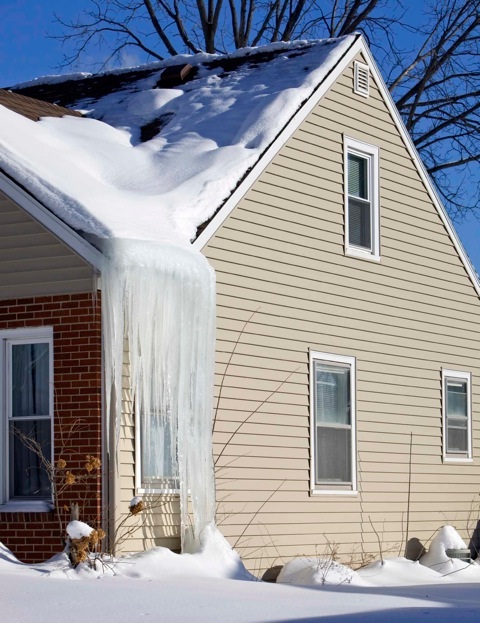
Professional Ice Dam Roof Repair Services in Hamilton
Roof edges take a beating from repeated freezing and thawing. We inspect shingles for lifting, cracking and granule loss, check flashing around chimneys, vents and skylights, and look for rot along the roof deck and fascia boards.
Ice-damaged eavestroughs are repaired or replaced and downspouts are cleared so melt water drains properly. Where water has gotten under the shingles, we cut out the damaged section, repair the deck, and install new underlayment and a waterproof ice-and-water shield along the eave before replacing the shingles.
Every repair is finished with one goal: keeping your home watertight through the next Hamilton winter.
Reliable Attic and Ceiling Leak Restoration for Hamilton Homes
When an ice dam leaks, the damage rarely stays on the roof. Water drips into the attic, soaks the insulation and runs along the rafters until it stains a ceiling or wall.
Inside the home, we find and remove insulation that’s no longer holding heat, dry the attic framing and sheathing, and check for early mould growth on wood surfaces. Damaged ceiling drywall below the attic is repaired, along with any affected exterior walls, baseboards and window frames where melt water collected.
Once everything is dry, we install new insulation, finish the drywall, repaint to match, and the upstairs rooms look like new again.
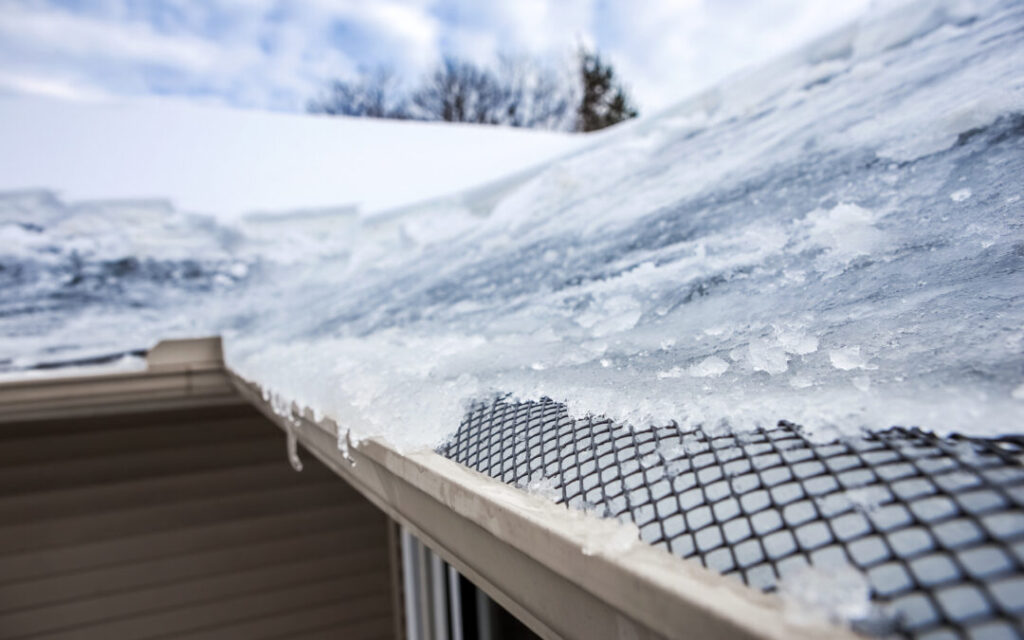
What Causes Ice Dams on Ontario Roofs?
Ice dams in fact begin in the house, not on the roof. Warm air enters the attic from living areas and melts the snow on top of the roof deck. That melt water flows down the incline until it reaches the colder roof overhang where it refreezes to form a ridge of ice.
With each thaw, another layer is added and the dam builds up until the water begins to pool behind it and has no place to drain. This cycle is particularly common in Ontario winters when daytime temperatures are above freezing but nights go well below.
Common causes of heat loss and the onset of the problem are poor attic insulation, clogged or missing soffit vents and gaps around ceiling light fittings and attic hatches.
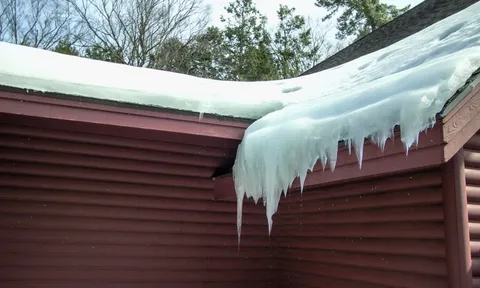
Warning Signs of Ice Dam Damage
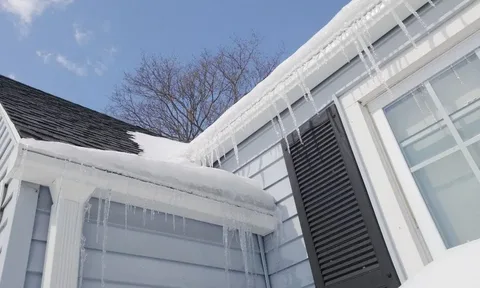
Some ice dam issues may be visible from the street while others may only be apparent when indoors. On the outside of the house, look for thick ice ridges along the roof eaves, long, thick icicles in eavestroughs, and water stains or ice accumulation on outside walls below the roof line.
Inside, check for water spots or browning in the ceilings and closets on upper floors, peeling paint around exterior walls and water dripping around window frames during a thaw. In the attic, frost on nail tips, damp insulation and dark discoloration on roof sheathing are signs of moisture problems.
If any of these are detected, schedule an inspection prior to the next thaw, since each thaw will cause more water to flow through the same vulnerable areas.
How to Prevent Ice Dams From Coming Back
Once the damage is repaired, half the job is complete, as ice dams will repeat each winter unless the underlying problem is resolved. The long-term answer is to keep the attic space cold, so snow melts evenly over the roof. This means sealing all air leaks around the living space below, insulating as recommended and not obstructing air flow from the soffit vents and roof vents.
If a dam does develop, ice and water shield installed along the eaves provides a waterproof barrier of protection. It is important to clear eavestroughs of leaves prior to the winter season as well, so that melt water can flow away.
Heat cables can be beneficial in problem areas, but never solve the problem and should be used in conjunction with insulation and ventilation.
Should You Remove Ice From Your Roof Yourself?
When ice forms, it’s easy to reach for a hammer or shovel to chip away at the dam, but doing that yourself can be more damaging than the ice itself. Hacking at ice easily cracks shingles, tears eavestroughs and damages flashing, all of which provide new openings for water. It can also be very hazardous to climb onto an icy roof without safety equipment.
As an alternative, a roof rake used from the ground can clear snow from the lower few feet of the roof after major snowfalls, which is a safer method.
If water is already dripping inside the home, put buckets under the drips, move valuables from the area, photograph the damage, and contact The Home Upgraders to inspect the roof and damage.
Key Benefits
Why Homeowners Choose Our Ice Dam Restoration
Roof and Interior, Handled Together
One team repairs the source on the roof and the damage inside, so you’re not coordinating a roofer and a separate contractor.
Lower Heating Bills
Replacing old, wet, flattened insulation with fresh, dry insulation keeps warm air where it belongs and can noticeably lower winter heating costs.
Protection Against Next Winter
Repairs target the weak points that let water in — from damaged eaves to worn flashing — so the same leak is far less likely to return.
Mould Stopped Early
Attic framing, sheathing and insulation are thoroughly dried and inspected to prevent a bigger, costlier mould problem come spring.
Stop Ice Dam Damage Before Next Winter
Every thaw gives trapped water another chance to find its way back inside. The Home Upgraders can repair the roof, restore the rooms below, and help your family look forward to next winter, serving Hamilton, Oakville, Markham and Vaughan.
Call 647-371-1937 or email thehomeupgraders@gmail.com to book an inspection, preferably before the first heavy snowfall.