
Interior Damage Restoration
Expert Interior Damage Restoration in Hamilton, ON
We trace every issue back to its source, fix what’s underneath, then restore the surface so the room looks like nothing ever happened.
Restoring Walls, Ceilings, Floors and Trim
A faint brown ring around the ceiling. Paint that keeps peeling in the same corner. A baseboard that’s started to swell. Each is one clue in a much bigger story.
Interior damage quietly erodes your comfort and your home’s value long before it becomes obvious. The Home Upgraders, based in Hamilton, offers interior damage restoration for walls, ceilings, floors and trim damaged by leaks, moisture or everyday wear.
We trace every issue back to its source, fix what’s underneath, then restore the surface so the room looks like nothing ever happened — not just patched up until the next issue.
Professional Drywall and Ceiling Damage Repair in Hamilton
Most interior damage lives in the walls and ceilings, and a can of spackle won’t solve it. We remove only the stained, soft or crumbling drywall and inspect the framing and insulation behind it.
Sagging ceilings are secured and rebuilt, nail pops and cracks are patched at their source, and every seam is taped, mudded and sanded until it disappears under paint.
We match existing finishes — including knockdown and orange peel textures — so repaired areas blend seamlessly with the rest of the room. Whether it’s a small hallway patch or a full ceiling replacement after a bathroom leak, the result is clean, smooth and livable.
Reliable Flooring and Trim Restoration for Hamilton Homes
Floor and trim damage often shows up last, which usually means there’s been an issue underneath for a while. We assess hardwood, laminate, luxury vinyl plank and tile to determine whether materials can be dried and refinished or need replacing.
Cupped, buckled or lifted hardwood is moisture-tested, and damaged subfloor sections are cut out and replaced before new hardwood goes down. Stained or warped window trim, door casings and swollen baseboards are removed and replaced with matching profiles, then caulked and repainted for a seamless finish.
When an exact match isn’t possible, we help you choose a new floor that completes the look of the room so repaired areas don’t stand out.
Signs Your Home Has Hidden Interior Damage
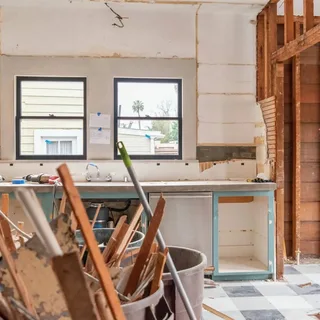
Damage inside can be easily overlooked as it may be concealed behind walls, beneath floors, or above ceilings. Look for yellow or brown spots that creep up on ceilings, peeling or bubbling paint, and soft drywall when pressing.
Other warning signs are musty odours in the closets, cabinets or basements, doors that stick and floors that feel spongy or uneven. Cracks that develop from the corners of windows and doors may indicate moisture or settling problems under the surface (particularly in older Hamilton homes).
It’s worth investigating the cause of any minor damage, since a problem that is identified early can be less disruptive, less costly and much smaller to repair than one that is ignored until it can no longer be ignored.
Repair or Replace? How We Decide
Not all damaged surfaces must be removed, and over-replacement increases costs. There are three main factors that dictate our recommendation: the degree of wetness or weakness of the material, the cause of the damage and the durability of the repair.
If the stain is light and dry, the drywall can usually be sealed with a stain-blocking primer and repainted; if the drywall is soft, crumbling or mouldy, it should be removed. While solid hardwood can sometimes be dried out, sanded down and refinished, laminate flooring boards that have swollen are unlikely to come back.
We always present you with our findings and discuss the options in plain terms so you can see what we are saying and why a repair or replacement is best for your home and budget.
Plaster Walls in Older Hamilton Homes
Many houses in neighbourhoods like Westdale and Kirkendall were built with plaster and lath walls rather than modern drywall. Plaster is a strong material, but when water penetrates behind it, the bond between the wood lath and the plaster becomes weak and the plaster can bulge, crack, loosen, and even fall off.
Plaster work is different than drywall work and requires a different set of skills. Depending on the extent of the damage, sections may be reattached and skim coated, or cut back and patched with drywall that is feathered in to blend with the surrounding wall.
Older plaster may contain material that requires special treatment, so it is advisable to check it prior to any demolition work. We work towards preserving the original character of an older home while also strengthening and securing it.
How Long Does Interior Damage Restoration Take?
The time frame depends on the extent of the damage, the materials involved and how quickly matching materials can be acquired. A small drywall patch or ceiling stain repair can often be finished in one to two days, including drying time for compound and paint.
Typically it takes about a week per room if the walls, floor and trim are all damaged. Projects that involve several rooms, subfloor replacement or plaster work can take 2-3 weeks.
Usually you can remain in your home while we work, as we contain the affected areas and keep dust contained. The Home Upgraders provides you with a written schedule before you begin, so you can plan your family’s activities around the project.
Key Benefits
What You Gain With Professional Interior Restoration
Seamless, Natural-Looking Repairs
Tight joints, matched textures and colour-matched paint mean walls and ceilings look so good, guests and future buyers never spot a patch job.
Protected Home Value
Stains, soft spots and cracked walls lower your home’s value if left unrepaired. Professional restoration protects resale value and keeps your home looking its best.
One Team for Every Surface
Walls, ceilings, floors, trim and paint are all handled by one coordinated crew, so you avoid booking separate trades and waiting on each one.
Upgrades Made Easy
With the wall already opened up, it’s an easy, lower-cost moment to add better insulation, new flooring or a refreshed colour scheme.
Ready to Love Every Room Again?
Picture walking into a room without that ceiling stain catching your eye. The Home Upgraders is based in Kirkendall and serves homeowners throughout Hamilton, Oakville, Burlington, Markham and Vaughan.
Call 647-371-1937 or email thehomeupgraders@gmail.com to arrange an inspection. No pressure, no upselling, just honest advice from people who care about doing it right.